
by Bleddyn (Samuel) V. Wilson (aka Meteoric Assault)
This article originally appeared in Issue #007 of the PDF magazine Freelance Traveller. The author, me, has decided to go back and edited for improved flow and clarity.
Author’s Note: I want to take a moment and thank Frank Chadwick and Loren Wiseman, the authors of the article ‘Zhodani Military Organization’ that appeared in JTAS #11 and inspired my interpretation, as seen here. Also, a special thanks to Marc Miller, the mastermind and “spiritual advisor” of the creative team that worked on Traveller®’s “adventure in the far future. “
Introduction
Within the ranks of the Zhodani military establishment exists the pinnacle of elite light infantry forces in the universe. They are the commando forces of the elite Consular Guard. The commandos are a product of the synergistic fusion of technology, psionic development, and applied military doctrine. Many in military circles would agree that the commandos’ pre-eminence rests firmly on the extraordinary psionic capability of teleportation (the psionic jump). However, that is not to say that they are not on par with the Imperial Marines, where tactical proficiency is concerned. Yet, this unique psionic capability allows the Zhodani Military High Command to overmatch their opponents through tactical mobility and surprise. Thus, Zhodani commanders have an edge in maintaining the strategic initiative. Often, commando missions can enhance ongoing military operations by inhibiting or sapping the initiative, tactical flexibility, and or morale of enemy forces. This force multiplier effect is inversely proportional to the commandos’ size and strength1. It is noted that the commando forces represent 2% of the actual combat battalions deployed in the Zhodani military theater of operations confronting the Imperium and its allies in or near the Spinward Marches. Also, it stands to reason that they are the most feared unit of the Zhodani ground forces2.
Doctrine and Training
The commandos, by nature, are light troops and, as such, are vulnerable to enemy armor and artillery/artillery fire. They rely on stealth and mobility to carry the day. These elite troops usually go into combat with only their high-energy weapons, tactical missiles, and battledress essentials. They don’t have the staying power and organic heavy support weapons of a typical lift infantry company/battalion. Thus, operations will use surprise (via jump capsule infiltration or psionic infiltration), speed, maximum violence in a short period of combat exposure, and a sound exfiltration (either a physical retrieval or psionic) plan to minimize friendly casualties. Though capable of fighting pitched battles, they prefer swift, direct-action operations with a higher likelihood of force preservation. When committed to pitched battles, they are often inserted at operations’ critical center of gravity. Frequently, their insertion proves to be the coup de grace for the enemy, and, regrettably, they can cause heavy casualties in executing these operations.
It is essential to discuss the commandos’ unique capability of teleportation. The Zhodani military procedure for psionic infiltration begins with the detachment directors (clairvoyant/telepaths) constructing the mental image of the infiltration zone (IZ). The image combines the directors using clairvoyance to view the IZ and other intelligence data3. This image is then telepathically “downloaded” to the commandos, who concentrate on the image for the psionic jump. When selecting an IZ, operational commanders and staff have to consider items such as temperature, latitude and longitude, and velocity of the target compared to the jump point of origin4. If telepathic infiltration operational parameters are not heeded, they can disorient the jumping troops and diminish combat effectiveness on the ground. Operations have been aborted when troops are psionically infiltrated and are too disoriented or injured due to environmental factors or poor planning to execute the mission. These essential factors must be addressed when planning a psionic jump and are often avoided by a thorough, proper reconnaissance (clairvoyant, electronic, visual, thermal, and seismic) of the target and the IZ. Some telepathic infiltrations over distant ranges (5-50km) or operations with telepathic exfiltration can be very draining, and as a precaution, commandos take psionic booster drugs to enhance performance5. Another critical doctrine item is disguising the commandos from enemy intelligence collection efforts. The concealment of commando units from enemy intelligence multiplies the chances of a successful outcome of their employment in the theater of operations. Commandos’ counter-intelligence (CI) sections work extensively to conceal commando formations’ logistical and electronic signatures. CI sections conduct electronic warfare to inhibit enemy collection activities and broadcast misleading unit signatures to confuse enemy analysts. Operational security (opsec) surrounding commandos’ movement and deployment is tight to prevent accidental disclosures of information. Successful missions occur when OPSEC is adequate; in some parts, the opposition lacked the information that psionic commandos were in the area and that countermeasures weren’t taken. When Zhodani counter-intelligence and OPSEC efforts fail, the losses are devastating.
Ground Operations
Raids The frequent tactical and operational targets of the commandos in surface operations are command and control centers, key logistic points, communication nodes, and staging areas for special weapons. Strategic missions usually are planetary raids with naval forces along the periphery of the axis of advance or deep penetration operations hitting the rear area systems with the primary objective of tying down and otherwise obligating valuable enemy military resources in a static defensive posture. The secondary aim is to destroy or damage targets of strategic value: governmental complexes, industrial centers, high-density population areas, and locations of cultural importance, thus crippling the enemy’s ability to execute the war from the home front and further lowering civilian morale and support.
Prisoner Snatches Commandos are used in detachments (squads) to infiltrate enemy formations and snatch prisoners for interrogation and tactical intelligence exploitation. Sometimes, if an enemy ranking officer’s whereabouts are known, a commando raid to snatch the target is launched to gain strategic Intelligence.
Intelligence Collection and Deception Missions Small sub-detachments of two to three commandos will infiltrate and establish observation points in enemy-held areas to collect Intelligence and act as forward observers. Sometimes, pathfinder teams infiltrate before operations to provide security or further collect Intelligence on the IZs. Many teams could be infiltrated and act as decoys to deceive the enemy about the actual target and tie down counter-attacking forces.
Disruption Operations in Support of Conventional Forces High-profile missions conducted by the commandos are often in conjunction with conventional offensive or retrograde operations6. These direct-action missions allow senior military commanders to react immediately to a change in the fluid tactical environment. Commando units further act as a strategic reserve to exploit any breakthroughs. Units are directly inserted into the combat area to lay ambush at vital enemy chokepoints, overwhelm and seize fortified strongpoints, and materialize behind enemy spearheads to disrupt or ambush follow-on forces7.
Counter Insurgency Operations The Consular Guard Commandos’ operational capabilities usually facilitate a very quick mop-up of insurgency forces. The Capabilities of the direction team combined with proper Intelligence give a comprehensive target package. Acting as an area fire force, swift and often surgical application of the commandos neutralizes or eliminates insurgent high profile or value targets, and it allows Zhodani field commanders to maintain the initiative in COIN ( counter-insurgency) operations.
Naval Operations
A commando groupment is permanently attached to a fleet command. Commando troops or detachments are dispersed to various ships and squadrons within the fleet. There they spearhead (via teleportation) boarding actions that have led to the capturing or crippling of enemy naval vessels8. They are also frequently employed in advance of operations (using teleportation or Jump Troop capabilities) to support the Zhodani Special Naval Landing Forces (ZSNLF) seizure of starports and orbital stations and establish beachheads on the surface.
Operations Other Than War
It is rare in Zhodani society that the military is seen aiding civil authorities against its citizens. There are documented times that the commandos have been used in hostage rescue operations and special tactical situations that demand their area of expertise. Usually, the commandos, in these cases, operate against non-Zhodani or extreme fringe groups (rare though present within the Consulate). It is also known that the Tavrchedl’ are now retaining, in times of peace, commando squadrons that operate in unique tactics and hostage rescue roles9.
Also, the commandos are sometimes detached to special security duties guarding members of the supreme Consulate. This duty is highly prestigious, and the selection process for such an assignment is competitive. The responsibilities include personal and site security at Zhdant or aboard the renowned Dranzhrin-Class Consular Corvettes. Those commandos selected often attend special courses on VIP security, advanced unarmed and blade combat, and special protocol training in interacting with non-Zhodani dignitaries. This particular assignment lasts an Olympiad, and the benefits are increased chances for promotion and social advancement.
Training
The selection and training of the commandos contrast somewhat with the customary practices of the military. The nature of Zhodani society, which embraces psionics, enables potential commando candidates to be identified early. Through state-sponsored youth programs and psionic institutions, the Consulate accurately gauges the aptitude and fulfills the training of Zhodani youth with significant psionic potential10. Many of these adepts are recruited early on for service in the Consular Guard. Recruits possessing the teleportation talent and strength required for the commandos are enticed by strong incentives (financial and social) to enter that respective branch of the Consular Guard. Commando volunteers undergo an intense two-year training syllabus, heavily stressing light infantry skills and tactics, military teleportation attunement and procedures, jump capsules, and protected forces training, and not to be left out are the primary cascade of commando skills. Upon completion of training, they are promoted to commissioned specialists (the equivalent of imperial warrant officers) and assigned to their first commando troop. Officers are selected, usually from the Nobility, and trained beside their troopers to create an esprit de corps and instill a healthy confidence between the leaders and the troops. Officers also undergo further training in operations planning and staff work to function independently with their commands without extensive staff support and guidance. Commando units undertake intensive training cycles to maintain unit tactical and individual skill proficiency when not conducting operations. It is also important to note that the commandos contain personnel who are not teleportation adepts. While they go through just as rigorous a training syllabus and a jump capsule qualification, they are mostly vehicle drivers and gunners in the commando squadrons. Specialist staff officers (Intelligence, medical, communications, etc.) and support technicians are attached to the headquarters or support squadrons.
The Commandos’ organization and structure reflect those of a light, highly mobile, self-contained unit. The following formations are provided for examination.
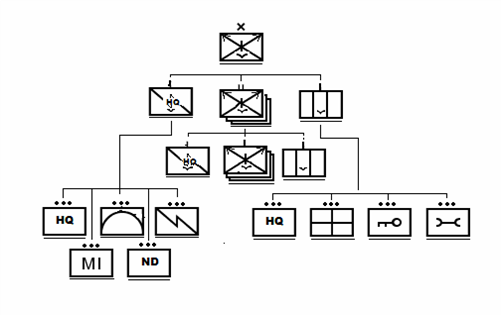
Commando Force The Commando Force is the largest tactical formation of teleportation capability deployed in the field by the Zhodani. It is similar in scope and size to a regiment. They are part of the organizational tables as one of the three jump troop regiments assigned to the elite Consular Guard jump divisions. A commando force is also attached as corps troops to Consular Guard Lift Infantry and Lift Mechanized Infantry Corps level formations. The consular army is attached as army troops to regular Zhodani Field Army level formations. A General Officer commands it, which consists of a Force Headquarters and Signal Squadron, three Commando Groupments, and a Force Support Squadron.
Force Headquarters and Signal Squadron The Command Troop contains the commanding general, his deputy, and the force battle staff (personnel, Intelligence, operations, logistics staff officers and deputies, and a master warrant officer); an eight-man security detachment on the battlefield protects them. The command and staff are divided into two large command grav sleds, fully integrated C7I command centers, each with a driver and gunner.
The Combat Electronic Warfare and Intelligence Troop supplements the existing capabilities at the groupment level and the platoon’s function to ensure the Force’s survival in the combat electronic warfare and intelligence dimension of the modern battlefield. It comprises an Intelligence section with a production team of two officers (assimilation and analysis), a counter-intelligence officer and technician ensuring tactical operational security, two interrogator specialists, two tactical intelligence support specialists (droid operators), and the drivers in two intelligence support sleds. The electronic warfare section contains a jamming and deception sled, manned by a warrant officer and four technicians with a driver, and an Intercept /direction-finding sled that also has a warrant officer and four technicians with a driver. Knowing that the CEWI troop has many Droids attached to the unit to enhance capabilities is essential. The intelligence section fields four reconnaissance druids carried on the intelligence support sleds. The electronic warfare section has two remote jamming droids and four remote direction finding / intercept droids. They are all carried by their respective sleds and greatly enhance the CEWI capability of the Troop.
The signals troop supports the Communications Troop for the Force. They can use laser, maser, radio, microwave, and meson communications. The unit communication network is interfaced digitally and encrypted for security. A junior officer commands the Troop, and two warrant officers assist him. The Troop is divided into a meson comm. sled with an NCO and four techs with a driver, three Laser, a maser, radio, microwave comm. sleds, each with an NCO, driver, and three techs. A communications utility support sled has a driver and carries the four repair technicians who assist in maintaining and repairing the Troop’s communications equipment.
The Nuclear Damper Troop is dedicated to force protection duties from incoming nuclear weapons attacks. A lieutenant commands it, and it contains six damper projector vehicles, each with a crew of a driver, an NCO, and two technicians, as well as a damper support vehicle with a driver and two repair technicians.
The Point Defence Troop provides a defensive umbrella under which the Force can operate. It contains four vehicles: three point defense sleds and a Fire Direction Control/Sensor sled. Commanded by a lieutenant, the Troop’s PD sleds consist of a driver, an NCO, and a gunner. The FDC/S sled has a driver, the lieutenant, and three FDC/S technicians. It can also deploy three PD Sensor droids that enable the continuity of coverage.
The Force Support Squadron consists of a Command Section, a Medical Troop, a Maintenance Troop, and a Support Troop.
Command section: The command section oversees the disposition and efficiency of the force support section. It consists of the squadron commander (captain) and a deputy (senior warrant officer), and it has two grav sleds for administration, command support, and allocation of support resources.
Medical Troop Led by the Force surgeon (Maj), it consists of a treatment section containing the Physician, his deputy, an admin specialist officer, two physician assistants, seven medics, and six medical droids, all of which are included in three grav vehicles that comprise the mobile treatment station. The Evacuation section, commanded by an NCO, contains four field grav ambulances, each capable of supporting four patients, containing a driver, gunner, two medics, and two medical litter droids. Support Section is a grav-sled with a driver, two Tech specialists, and four repair droids who service and repair the medical equipment.
A senior warrant officer commands the maintenance troops. The troop’s role is to service and repair all of the Force equipment and provide expanded service to the assigned group. It contains six maintenance vehicles for service and repair, each consisting of a driver, gunner, NCO, and four techs and four repair droids.
Support Troop The Support Troop provides logistical and culinary support to the Force. The Logistics section contains six logistics vehicles, each with two personnel assigned and four robots. The logistics vehicles are stocked with required sundries and parts to support battlefield conditions. There are three culinary and hygiene support vehicles, each supporting a grouping of food and hygiene facilities. A senior warrant officer commands the support Troop.
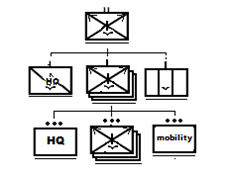
Commando Groupment The commando groupment is a battalion-sized tactical element attached to regular army jump divisions (albeit they contain supplemental firepower in the jump divisions), Consular Guard Lift Infantry, and Lift Mechanized Infantry Divisions. A groupment is attached to regular army corps as corps troops and to Zhodani fleet formations. A colonel, assisted by a lieutenant colonel, commands the groupment. It comprises a Headquarters and Signals Squadron, three Commando Squadrons, and a Support Squadron.
Groupment Headquarters and Signal Squadron The Groupment Headquarters and Signal Squadron comprise a command troop, a combat electronic warfare and Intelligence (CEWI) troop, a signals section, a nuclear damper section, and a point defense section. The command troop contains the Colonel, his deputy, and the force battle staff (personnel, Intelligence, operations, logistics staff officers, deputies, and the groupment chief master warrant officer); an eight-man security detachment on the battlefield protects them. The command and staff are divided into two large command grav sleds, fully integrated C7I command centers, each with a driver and gunner.
The Combat Electronic Warfare and Intelligence Troop supplements the existing capabilities at the level and the platoon’s function to ensure the Force’s survival in the combat electronic warfare and intelligence dimension of the modern battlefield. It is comprised of an Intelligence section that has a production team of two officers (assimilation and analysis), a counter-intelligence officer and technician ensuring tactical and operational security, two interrogator specialists, two tactical intelligence support specialists (droid operators), and the drivers in two intelligence support sleds. The electronic warfare section contains a jamming and deception sled, manned by a warrant officer and four technicians with a driver, and an intercept/direction-finding sled that also has a warrant officer and four technicians with a driver. Knowing that the CEWI troop has many Droids attached to the unit to enhance capabilities is essential. The intelligence section fields four reconnaissance droids, which are carried on the intelligence support sleds. The electronic warfare section has two remote jamming droids and four remote direction finding/intercept droids. They are all carried by their respective sleds and greatly enhance the CEWI capability of the Troop.
The Communications Section for the Groupment is supported by the signals troop. They are capable of laser, maser, radio, microwave, and meson communications. The unit communication network is interfaced digital and encrypted for security. A junior officer commands the Troop, and two warrant officers assist him. The Troop is divided into a meson comm. sled with an NCO and four techs with a driver, and a Laser, maser, radio, microwave comm. sled with an NCO, driver and three techs. A communications utility support sled has a driver and it carries the four repair technicians who assist in maintenance and repairs of the Troop’s communications equipment.
The Nuclear Damper Section is dedicated to force protection duties from incoming nuclear weapons attacks. It is commanded by a Staff Sergeant and contains two damper projector vehicles each with a crew of a driver, a NCO and two technicians, and a damper support vehicle with a driver and two repair technicians.
The Point Defence Section provides a defensive umbrella under which the Force can operate. Commanded by a warrant officer it contains four vehicles: three point defense sleds and a FDC/S sled. PD sleds consist of a driver, an NCO, and a gunner. The FDC/S sled has a driver, the warrant officer, and three FDC/S technicians. It can also deploy three PD Sensor droids that enable the continuity.
Groupment Support Squadron
Command Section The Coordination of support elements for the squadron rests with the command section of the support squadron. Commanded by a captain, the squadron support section contains two command and control vehicles with a driver, gunner, and vehicle commander. The section also includes the Senior Squadron NCO and the Squadron XO, who assist in coordinating support efforts.
The Medical Section Commanded by the squadron Physician Associate, comprises a surgical/treatment vehicle (with a driver, commander, gunner, three medical assistants, and four medical support droids) that performs minor surgery and tailgate medicine. The three other vehicles are the medical evacuation grav carriers with a driver, gunner-commander, and two combat medics for casualty treatment. The vehicles also have the support of two casualty litter droids.
Maintenance Troop This Troop attempts to maintain the grouping’s equipment and weapons at a local level; the more serious repairs and overhauls are completed at a higher-echelon depot. It is commanded by a senior warrant officer and has three repair sleds containing a driver, gunner, and four repair specialists led by an experienced NCO. Each vehicle has two heavy repair droids.
Support Troop The support troop manages the supply chain and provision of stores for the commando groupment. Led by a senior warrant officer, it contains a warehouse section and three transport squads. The warehouse section comprises three heavy logistics vehicles and is led by an NCO with twelve enlisted men assisted by four heavy logistics robots. Each transport squad shall consist of two light logistics vehicles commanded by an NCO. The squad comprises two drivers, two gunners, and two logistics specialists. Each vehicle has two logistics droids to aid them.
Commando Squadron The commando squadron is a company-sized unit; it is independently attached to Independent Consular Guard Lift-Infantry and Lift-Mechanized Infantry Regiments. Commanded by a major, the squadron’s composition is Command & Direction Troop containing a command party: the major and his deputy, the squadron chief warrant officer, a security element of four commandos, a small staff of two senior warrant officers who act as intelligenceand an operations staff technicians, and a senior medical specialist. All members of the command party are teleport adepts. The direction section (where the eleven detachment directors and clairvoyant/telepaths are located), three Commando Troops, and a Commando Mobility Troop.
Commando Troop The platoon-sized commando formation is commanded by a captain and assisted by a lieutenant and a troop chief warrant officer (he acts in the role of a Platoon Sergeant and is usually a well-seasoned combat veteran) and has three detachments (squads) led by sub-lieutenants and two subalterns assist him and has eight commissioned specialists. It is important to note that the command party also includes two additional teleport adepts who function as the Troop’s medical specialist.
Commando Mobility Troop The Mobility Troop provides greater combat range, protection, and firepower for the commandos. It is often used to transport the commandos to and from the battlefield, and at times, it is used in conjunction with operations in a retrieval or insertion capacity. It contains twelve Dravar-family Grav AFV sleds, each with a driver/mechanic.
Equipment The Zhodani Consular Guard Commandos are equipped with the highest quality arms and armaments within the Consulate (tech level 14). Due to the restrictions placed by jump and psionic operations, emphasis is placed on portability and lethality. Guards Battledress is a standard issue for teleport and psionic personnel. The units’ support personnel are issued Guards Combat Armor and Gauss weapons. Powered troops enjoy a plethora of integrated weapon systems. Their primary weapon is the ever-present PGMP-13 personal weapon or FGMP-14 detachment support weapon. The Y-rack is a destructive infantry-enhancing system that launches hands-free various grenade-sized munitions. A ranged weapon at the commando’s fingertips is an integrated Tactical Rocket Launcher (with fire and forget HE, HEAP, SAM, and small yield (.2 Kt) thermonuclear rockets for engaging targets at range. The Thiazhashal corporation designed the droppable Dravar-family light armored grav-fighting vehicles for the jump and commando forces. They provide a mobility platform and improve the firepower of these light forces. They include a standard infantry carrier, an armed reconnaissance/direct fire support version, command and control versions (to include electronic warfare and communications), combat support (point defense, screens, combat engineering, etc.), service and support version (logistics, surgical, ambulance, and repair versions). Unlike many interstellar organizations, the Zhodani military extensively uses warbots in conjunction with military operations in combatant and non-combatant roles. Due to the nature of psionic operations, the commandos have little use for the warbots commonly seen in other Zhodani formations11. Yet, they have many ‘expert’ droids within the TO&E to assist support personnel with support tasks. They include medical droids, repair droids, recon probes, and remote sensor droids made by either IAD or Tliazhashal.12
Notes
1 “Commandos cause disruption and moral deterioration greatly out of proportion to their actual numbers”, Journal of the Travellers’ Aid Society (JTAS) #11 (GDW) ‘Zhodani Military Organization’ p.26.
2 “Even though the 95 Groupments (battalion-sized units) known to be in the Spinward Marches represent only 2% of the combat battalions in the sector”. p26.
3 JTAS #11 ‘Zhodani Military Organization’ p.28
4 Book 3: Worlds & Adventures p.44
5 JTAS #11 ‘Zhodani Military Organization’ p.26-27
6 p.28
7 p.28
8 Adventure 7: Broadsword
9 GURPS Traveller: Alien Races 1 p.41
10 JTAS #9 ‘Contact: Zhodani’ p.9 -11
11 Book 8: Robots p.11
12 p.17
.
This page last updated on 6 Sept 2024 ©2010-2024 Bleddyn (Samuel) V. Wilson III (Meteoric Assault)
 The Sheyou Downport